
What Is Sound Healing? A Beginner’s Guide to Sound, Vibration and Relaxation

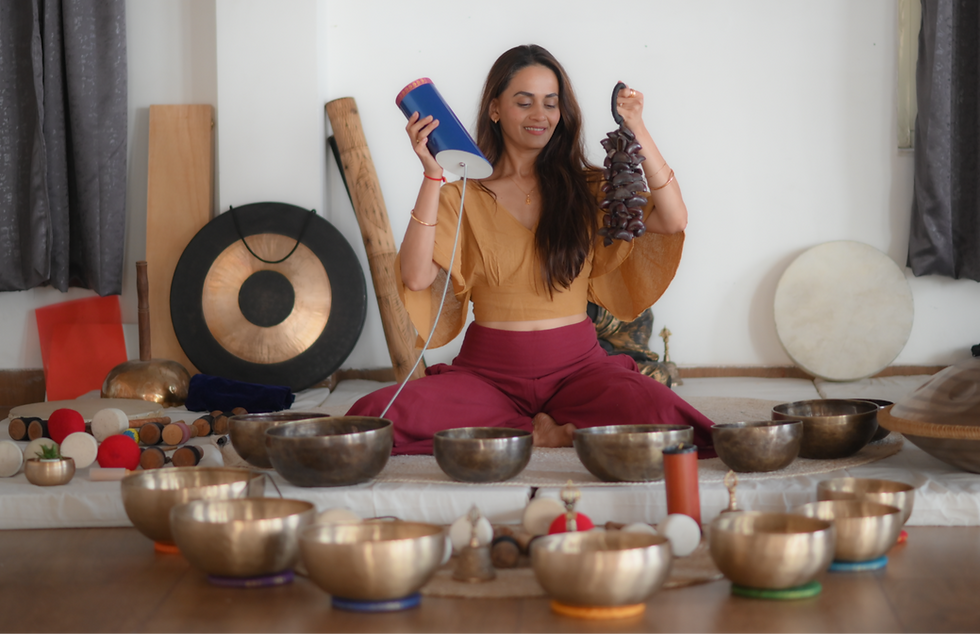
Sound can change the atmosphere of a room almost instantly. A sudden loud noise can make the body alert. A familiar song can evoke a memory. A steady rhythm can capture our attention, while a gentle voice may help us settle. So it is understandable that human beings have used sound within ritual, music, meditation, spiritual practice and communal experience for centuries.
Today, practices involving singing bowls, gongs, chimes, drums, mantra and voice are frequently grouped under the term sound healing.
But what exactly is sound healing? Can vibration really affect the body? What is a frequency? Why do singing bowls seem to produce several sounds simultaneously? What happens during a sound bath? And does science actually support the claim that particular frequencies can “heal” us?
These questions deserve better answers than: “Everything is vibration.”
Sound is fascinating enough without needing exaggerated explanations.
Understanding what sound actually is and distinguishing traditional practice, modern wellness culture and emerging scientific research is one of the foundations of responsible sound facilitation.
What Is Sound Healing?
Sound healing is a broad contemporary term used for practices that intentionally employ sound as part of relaxation, meditation, contemplative practice or wellbeing.
A sound healing session might involve instruments such as:
Himalayan or metal singing bowls
crystal singing bowls
gongs
bells
chimes
drums
tuning instruments
rattles
voice
mantra
humming
toning
periods of deliberate silence.
Some sessions are described as sound baths, because participants usually lie or sit comfortably while sound is created around them. Other approaches may be more interactive and incorporate breath awareness, meditation, mantra, movement or voice.
There is no single universally standardised method called “sound healing”, which is important to understand. The term can describe very different practices depending on the facilitator, tradition and training.
What Is Sound?
Before discussing sound healing, we need to understand something much simpler: What is sound?
When an object vibrates, it can cause particles in the surrounding medium, such as air, to move. This movement creates changes in air pressure that travel outward as sound waves. When those pressure waves reach the ear, they can ultimately be interpreted by the brain as sound. So if you strike a singing bowl, the bowl physically vibrates.
Those vibrations disturb the surrounding air. The resulting sound waves travel through the room and reach the listener. This is not mystical. It is acoustics. And understanding this gives sound facilitators a much stronger foundation than simply repeating that “everything vibrates”.
What Is Vibration?
Vibration simply describes repeated movement around an equilibrium position.
Strike a singing bowl and its material moves rapidly back and forth.
Pluck a guitar string and the string vibrates.
Place your fingers gently against your throat while humming and you can physically feel vibration.
Sound and vibration are therefore closely related.
But they are not interchangeable terms. Sound is produced when vibration creates a pressure wave capable of travelling through a medium.
This is why sound cannot travel through a perfect vacuum: there are no particles available to transmit the pressure wave. For sound facilitators, this distinction matters because explanations should be understandable without relying on vague statements about “energy” or quantum physics.
What Is Frequency?
Frequency refers to how many cycles of vibration occur per second. It is measured in Hertz, abbreviated to Hz.
For example: 100 Hz means approximately 100 cycles per second. 500 Hz means approximately 500 cycles per second.
Generally, higher-frequency sounds are perceived as having a higher pitch, while lower-frequency sounds are perceived as lower in pitch. However, musical sound is more complex than a single number.
A singing bowl does not usually produce one perfectly isolated frequency. Instead, it creates a fundamental tone accompanied by additional frequencies known as harmonics or overtones.
These additional frequencies contribute to the distinctive richness of the instrument. This is one reason two singing bowls labelled with the same musical note can sound dramatically different.
Why Do Singing Bowls Sound So Complex?
A singing bowl is not simply producing one neat note. When the bowl vibrates, different vibrational modes may occur simultaneously. What we hear is therefore a combination of frequencies interacting with one another.
The size, shape, thickness, material and method of playing the bowl can all influence its sound. A mallet striking the bowl may produce a different quality from a mallet moving around the rim. Even the surface beneath the bowl and the way it is held can affect resonance. Understanding these acoustic principles helps move sound facilitation away from magical thinking and towards genuine listening.
What Is Resonance?
Resonance is another word frequently used in sound healing. In physics, resonance describes what happens when a system responds particularly strongly to a frequency close to one of its own natural frequencies.
You may have experienced this when a particular bass note causes something in a room to buzz or vibrate. Sound can therefore create real physical vibration.
But that does not automatically mean every vibration has a medical healing effect. This is an important distinction. A physical phenomenon can be real without every wellness claim attached to it being scientifically established.
What Is a Sound Bath?
A sound bath is usually a passive listening experience. Participants may lie on yoga mats with blankets, bolsters or cushions while a facilitator plays a selection of instruments.
A typical sound bath might include:
arrival and grounding
breath awareness
gentle introduction of sound
singing bowls or chimes
deeper layers of sound through bowls or gongs
voice, humming or mantra
gradual reduction of sound
silence
reorientation.
There is no compulsory formula. In fact, one of the important skills in sound facilitation is learning not to play constantly. Silence is part of sound practice. If every moment is filled with another instrument, another strike and another layer of noise, the session can easily become stimulation rather than relaxation.
How Might Sound Support Relaxation?
Sound may influence our experience in several ways. First, it directs attention. When someone lies still and listens to the fading resonance of a singing bowl, attention may temporarily move away from everyday thought and towards an immediate sensory experience.
Second, predictable or gentle sound may help create an environment that some people experience as calming.
Third, a sound session often includes other relaxation-supporting elements:
lying down comfortably
closing or softening the eyes
reduced conversation
slower breathing
dimmed lighting
fewer external demands
meditation
stillness.
This makes an important scientific question surprisingly complicated: Are people relaxing because of the frequency of the bowl, the sound itself, the meditation, the environment or a combination of all of these? Research is beginning to explore that question.
What Does Research Say About Singing Bowls and Relaxation?
Research into singing bowls is still relatively young. A 2025 systematic review examined 19 clinical studies published between 2008 and 2024, including nine randomised controlled trials. The researchers reported potential benefits across several psychological and physiological outcomes, including anxiety and sleep-related measures, but the studies varied considerably in design, population and intervention. That means the findings are interesting, but they should not be interpreted as proof that singing bowls treat disease.
An earlier observational study involving 62 participants found reductions in self-reported tension, anger, fatigue and depressed mood following a singing-bowl sound meditation. Because it was an observational rather than a tightly controlled clinical trial, however, it cannot establish that the bowls alone caused those changes.
A randomised controlled study has also reported changes in measures associated with acute relaxation, including heart-rate variability and self-reported anxiety, following Tibetan singing-bowl sound compared with progressive muscle relaxation and a waiting-list condition.
So the responsible conclusion is not: “Science proves sound healing heals the body.”
It is: There is emerging evidence that some sound-based practices may support relaxation and aspects of wellbeing, but research remains developing and many stronger therapeutic claims have not been established.
That distinction is fundamental to responsible facilitation.
What About Brainwaves?
Sound-healing discussions frequently mention:
Delta
Theta
Alpha
Beta
Gamma.
These are categories used to describe ranges of electrical activity measured in the brain, typically through electroencephalography or EEG. They do not represent mystical frequencies floating around the body.
Different patterns of brain activity may be associated with different states and cognitive processes, although the relationship is considerably more complex than:
Alpha = relaxed
Theta = meditation
Delta = healing
A small study examining singing-bowl massage found measurable changes in EEG activity alongside changes in heart rate and participants' reported wellbeing. The researchers interpreted the findings as potentially consistent with a more meditative state, but studies of this kind do not establish that listening to one particular bowl frequency automatically places the brain into one specific state.
This is precisely where sound facilitators need both curiosity and restraint.
Are 432 Hz and 528 Hz Healing Frequencies?
You may have encountered statements online such as: “432 Hz is the natural frequency of the universe.” or “528 Hz repairs DNA.”
These are much stronger claims than current evidence supports. There can certainly be aesthetic, musical or personal reasons why someone prefers one tuning or frequency. But preference should not be confused with proven medical effect.
One of the problems within modern sound-healing culture is that legitimate concepts from acoustics become mixed with extraordinary biological claims. A frequency can be accurately measured. That does not automatically prove a particular therapeutic outcome. At The Yoga Nerds, we believe sound facilitators should understand the difference.
What Is the Difference Between Sound Healing and Nāda Yoga?
Sound healing and Nāda Yoga overlap, but they should not simply be treated as interchangeable terms. Nāda means sound.
Within yogic traditions, Nāda Yoga explores sound and deep listening as part of a spiritual and contemplative path. Traditional discussions may distinguish between āhata nāda, audible or struck sound, and anāhata nāda, the concept of inner or unstruck sound. The emphasis is therefore much broader than lying in a room listening to singing bowls.
Nāda Yoga may incorporate:
mantra
voice
listening
meditation
inner sound
attention
silence
contemplative practice.
Modern sound baths can certainly incorporate yogic elements, but describing every sound-healing session as Nāda Yoga can remove the term from its philosophical context. For yoga teachers, understanding that distinction allows sound practice to be integrated with considerably more depth.
Is a Sound Bath the Same as Sound Healing?
Not necessarily. A sound bath generally describes the format of the experience: participants are immersed in sound created by a facilitator. Sound healing is a broader umbrella term.
Someone might therefore offer:
a sound bath
a private sound session
mantra meditation
singing-bowl meditation
voice and toning
sound combined with Yoga Nidra
sound combined with Restorative Yoga.
The terminology is still inconsistent across the wellness industry. Rather than focusing only on the title, it is worth examining how the practitioner is trained and what claims they make about their work.
Can Sound Be Felt in the Body?
Yes. Low-frequency sound in particular may sometimes be experienced physically as well as auditorily. Anyone who has stood near a powerful bass speaker has experienced this. A singing bowl placed close to the body may also create perceptible vibration. Again, that physical sensation is real.
What requires caution is the leap from: “I can feel this vibration” to “this vibration is healing a specific organ, tissue or medical condition.”
Those are completely different claims. Professional integrity means knowing where the evidence ends.
Do Sound Healing Sessions Have to Be Loud?
Absolutely not. More volume does not mean more therapeutic value. Hearing safety matters.
Gongs, crystal bowls and other instruments can produce significant sound pressure depending on how they are played and how close the listener is positioned.
A skilled facilitator therefore needs to understand:
volume
distance
duration
room acoustics
instrument placement
individual sensitivity.
Sound should not become something the participant simply has to endure.
Is Sound Healing Suitable for Everyone?
Many people enjoy sound baths and find them relaxing. Others do not. Some people may be particularly sensitive to sound, vibration or unexpected changes in volume.
People with tinnitus, hearing difficulties, sound-triggered migraine or other conditions affected by sound may need modifications or professional medical guidance depending on their individual circumstances. Some participants simply dislike particular instruments. That matters too.
A facilitator should never assume that a gong, bowl or particular tone feels soothing to everyone simply because the teacher personally enjoys it. Choice remains important.
Participants should feel able to:
adjust their position
move further from an instrument
keep their eyes open
decline touch or instruments placed close to the body
use hearing protection where appropriate
leave the session if necessary.
Holding space is not about controlling someone's experience. It is about creating conditions in which they retain agency within it.
Why Training Matters for Sound Healing Facilitators
It is relatively easy to buy a singing bowl. That does not automatically make someone a skilled sound facilitator. Good training should move far beyond learning how to strike an instrument.
A sound healing facilitator should develop an understanding of:
sound and vibration
frequency and pitch
resonance
harmonics and overtones
instrument technique
listening
room acoustics
volume and hearing safety
session structure
contraindications
professional scope
consent
language
meditation
silence
responsible claims
holding space.
For yoga teachers, training can also explore how sound relates to:
Nāda Yoga
mantra
meditation
Yoga Nidra
Restorative Yoga
yogic philosophy.
This creates a much richer foundation than simply memorising which bowl supposedly corresponds to which chakra.
Sound Healing Training in Edinburgh, Scotland and Online
Interest in sound baths and sound healing has grown significantly across the United Kingdom, including Edinburgh and throughout Scotland. For anyone considering professional training, one of the most important questions is not simply: “How many instruments will I learn?”
It is: “Will this course teach me to understand what I am doing?”
At The Yoga Nerds, sound education is approached through a combination of practical facilitation, sound principles, yogic context, Nāda Yoga, meditation, professional responsibility and thoughtful use of instruments.
Our 50-Hour Sound Healing Facilitator Training is designed for yoga teachers, wellbeing practitioners and committed students who want to develop a more informed relationship with sound rather than simply reproduce a sound-bath sequence.
Explore the 50-Hour Sound Healing Facilitator Training at The Yoga Nerds, with training opportunities connected to Edinburgh, Scotland and online learning.
Frequently Asked Questions About Sound Healing
What is sound healing in simple terms?
Sound healing is a broad term for practices that intentionally use sound, music, voice or vibration to support experiences such as relaxation, meditation and wellbeing.
What happens during a sound bath?
Participants usually lie or sit comfortably while a facilitator plays instruments such as singing bowls, gongs, bells and chimes. Some sessions also include meditation, voice, mantra or periods of silence.
Is sound healing scientifically proven?
Research into singing bowls and sound-based interventions is developing. Some studies report encouraging findings related to relaxation, anxiety and wellbeing, but the evidence does not support every medical or frequency-specific claim made within the wellness industry.
What is vibration in sound healing?
Vibration is repeated physical movement. When an instrument such as a singing bowl vibrates, it creates pressure waves within the surrounding air that we perceive as sound.
What is frequency?
Frequency describes how frequently a vibration repeats and is measured in Hertz (Hz).
Are singing bowls really healing?
Singing bowls can produce complex and immersive sound and some research suggests they may support relaxation and wellbeing. Calling them a treatment or cure for medical conditions, however, goes substantially beyond what current evidence establishes.
What instruments are used in sound healing?
Common instruments include metal singing bowls, crystal bowls, gongs, chimes, bells, drums and voice. A skilled facilitator does not necessarily need a large collection of instruments.
Do you need to understand music to learn sound healing?
You do not necessarily need formal musical training. However, learning basic concepts such as pitch, frequency, rhythm, resonance, harmonics, dynamics and listening can make someone a considerably more informed facilitator.
What is the difference between sound healing and Nāda Yoga?
Modern sound healing is a broad wellbeing category involving sound and vibration. Nāda Yoga belongs within the wider yogic tradition and uses sound and deep listening within a contemplative and spiritual framework.
Can yoga teachers use sound healing?
Yoga teachers may choose to develop additional training in sound, particularly when integrating singing bowls, voice or mantra with meditation, Restorative Yoga or Yoga Nidra. Training also helps teachers understand scope of practice, safety and responsible language.
Where can I study sound healing in Edinburgh or Scotland?
The Yoga Nerds offers specialist education in sound and Nāda Yoga through its 50-Hour Sound Healing Facilitator Training, suitable for those looking for sound healing training connected to Edinburgh, Scotland and online study.
Sound Does Not Need Extraordinary Claims to Be Powerful
Sound is already extraordinary. A vibrating piece of metal can send pressure waves across a room. Those waves reach the ear. The brain interprets them. Attention changes. A tone fades into silence. Another emerges. We listen. We notice. Perhaps, for a while, we become quieter.
None of this requires us to pretend that every frequency cures an illness or that every vibration has a hidden medical function.
Responsible sound practice can hold two ideas simultaneously: sound has a profound capacity to shape human experience and we should remain honest about what we actually know.
For a sound facilitator, that combination of curiosity and discernment matters.
Because learning how to create sound is relatively easy. Learning how to listen, understand, facilitate and know when silence is enough, that is where the deeper education begins.
Namaste,


Comments